

E-commerce fulfillment has transformed dramatically over the past decade. What was once a straightforward warehouse operation has evolved into a high-speed, technology-driven ecosystem where accuracy, efficiency, and scalability determine competitive advantage.
Today, fulfillment centers are under constant pressure to process higher order volumes, handle expanding SKU ranges, and meet next-day or even same-day delivery expectations. The future of e-commerce fulfillment lies at the intersection of speed and scalability — StringGlobal
Modern e-commerce facilities face several critical challenges:
Traditional warehouse models struggle to keep up with these demands. Manual processes create bottlenecks, increase error rates, and limit throughput capacity. To remain competitive, businesses must adopt fulfillment strategies built for long-term flexibility.
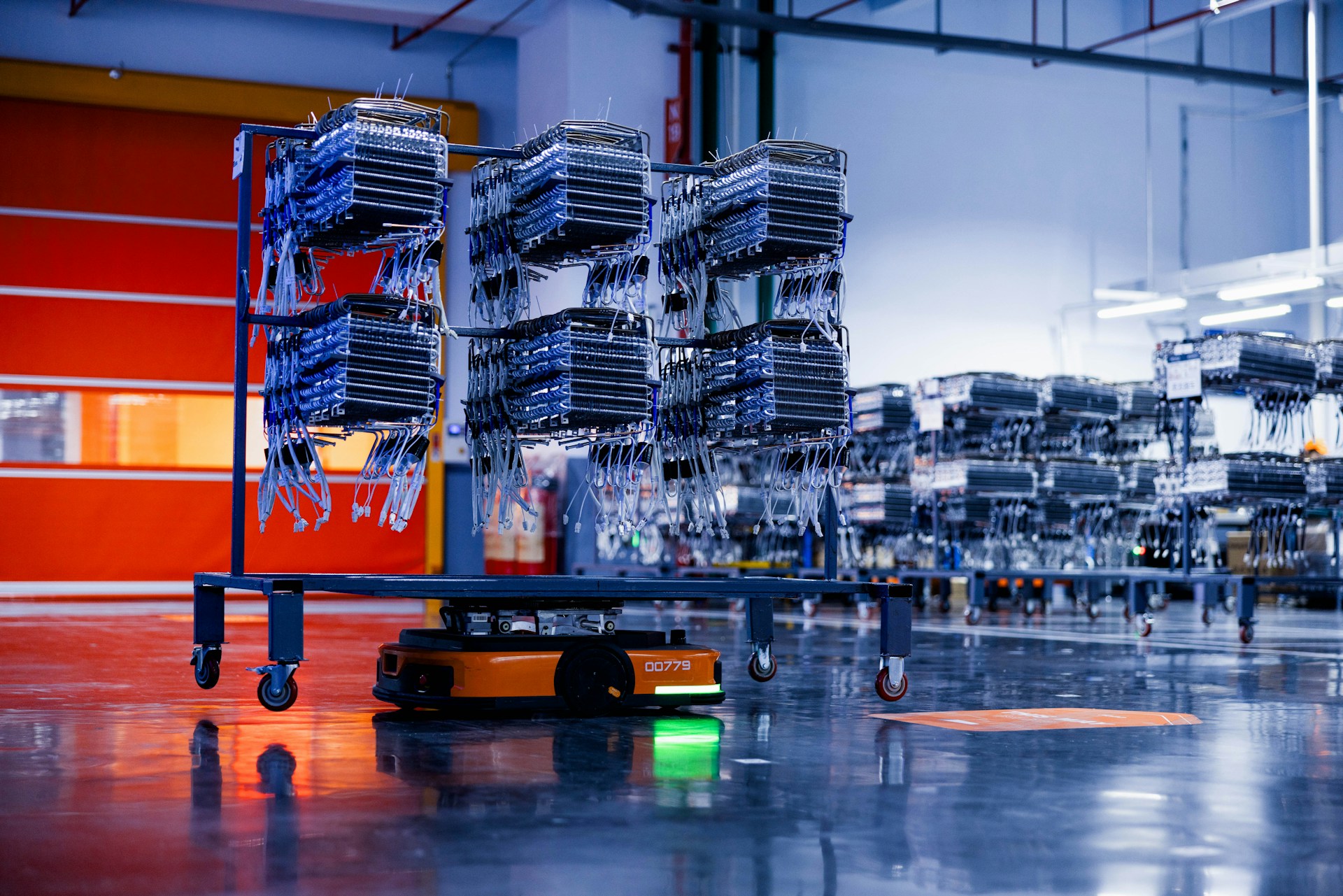
Speed in fulfillment is no longer optional — it is a strategic necessity. Automation technologies are enabling facilities to dramatically increase processing rates while reducing manual handling.Intelligent facility design ensures space optimization while leaving room for expansion.Scalable systems prevent costly redesigns and protect long-term capital investment.
The future of fulfillment is StringGlobal
Warehouse Management Systems (WMS) and integrated automation platforms provide insights into:
Data allows facilities to continuously refine operations, balance workloads, and make informed expansion decisions.
Automation does not eliminate jobs — it transforms them. Repetitive transport tasks can be automated, allowing workers to focus on quality control, supervision, and value-added processes.
Benefits include:
A balanced automation strategy improves both operational efficiency and workforce conditions.
Future-ready fulfillment centers also prioritize sustainability. Energy-efficient motors, optimized routing systems, and intelligent idle-time management reduce overall power consumption. Scalable automation reduces unnecessary facility expansion, minimizing environmental impact while maximizing output per square meter.
Facilities that invest in scalable automation gain measurable advantages:
In a competitive e-commerce environment, operational agility becomes a key differentiator.
The future of e-commerce fulfillment is defined by systems that combine speed with scalability. Intelligent automation, modular design, and real-time data integration allow fulfillment centers to adapt quickly without sacrificing performance. Companies that plan for growth today — by investing in flexible, automation-ready infrastructure — will lead tomorrow’s logistics landscape. Speed wins customers. Scalability secures the future.
.jpg)
.jpg)
.jpg)