

Introduction
Google Ads compliance means ensuring that advertiser identity, ad content, landing pages, payment details, account access, and user experience consistently meet platform requirements. Account suspension is only one of the most visible outcomes after compliance risks accumulate. For companies expanding overseas, a mature Google Ads program must build real, transparent, and verifiable business and operating processes while pursuing leads, orders, and return on investment. This article focuses on Google Ads, reviewing common compliance risks, causes of account suspension, appeal approaches, and long-term maintenance practices to help companies make compliance part of daily campaign management and reduce the risk of business disruption.
1. Google Ads Account Suspension
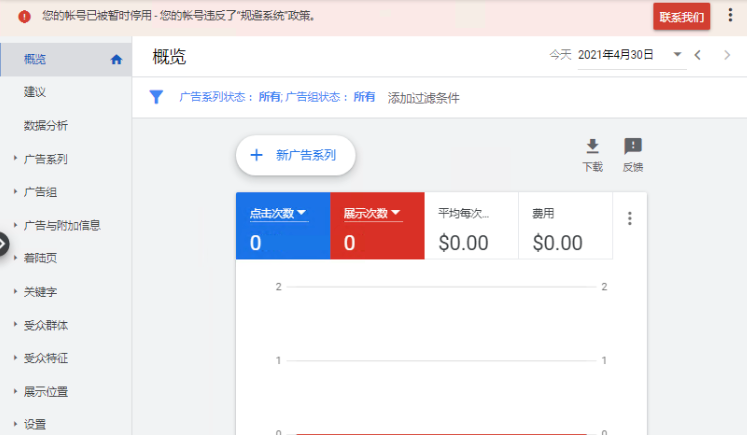
An ad disapproval usually means that a specific ad, asset, or destination does not meet requirements. An account suspension, by contrast, is an action the platform takes after assessing the advertiser's overall risk. Google states that ads in suspended accounts stop running and that the account is generally placed in read-only status. Related accounts and subsequently created accounts may also be affected.
Companies should therefore not treat an account suspension as a simple creative issue. A more accurate interpretation is that the platform is evaluating whether your business information, website experience, payment details, account relationships, and advertising behavior collectively represent an advertiser that can be trusted over the long term.
| Status | Scope of impact | What the company should do |
|---|---|---|
| Ad disapproval | A specific ad or asset cannot run | Review the cited policy, revise the asset or landing page, and resubmit it. |
| Temporary hold or pause | The account cannot run ads for a limited period | Complete the remediation, acknowledge the warning, or verify the payment method. If the decision appears incorrect, submit a targeted appeal. |
| Account suspension | The entire account stops running ads, and related assets may also be affected | Stop actions that could expand the risk, complete a root-cause investigation, remediate the issues, organize the evidence, and then submit one high-quality appeal. |
Key assessment Google may consider ads, accounts, websites, user complaints, consumer reviews, regulatory warnings, and other third-party sources when determining whether a violation has occurred. When handling a suspension, companies must review the business, account, website, and payment layers together.
2. Why Google Ads Accounts Get Suspended
1. Egregious violations: suspension may occur without warning
Google classifies circumventing systems, coordinated deceptive practices, counterfeit goods, malicious software, and unacceptable business practices as egregious violations. For these issues, an account may be suspended immediately without a standard warning first.
2. Repeated violations: from warnings and holds to suspension
For policies covered by the strikes-based system, a first violation usually results only in a warning. A subsequent violation of the same policy may then trigger a 3-day hold, a 7-day hold, and ultimately an account suspension. Google's rules also emphasize that monitoring continues even after an account hold has been lifted.
3. Payment, verification, and account security issues
Unpaid balances, suspicious payments, chargebacks on legitimate advertising costs, and promotional code abuse can all lead to account suspension. Advertiser verification may become a required step before an appeal can be reviewed, while unauthorized access may cause an account to be temporarily suspended to protect funds.
| Risk category | Typical indicators | Remediation priority |
|---|---|---|
| Misrepresentation | The business entity, credentials, pricing, promotions, product capabilities, or authorization relationships are unclear or untrue | Ensure that ads, landing pages, company information, and actual delivery are consistent, and provide verifiable documentation. |
| Circumventing systems | Creating a new account after suspension, attempting to bypass enforcement, or continuing to advertise through an opaque setup | Stop the related activity and return to root-cause remediation and the formal appeal process for the original account. |
| Website and destination | 403, 404, or 5xx errors, abnormal redirects, crawl failures, compromised pages, or inconsistencies between ads and pages | Fix accessibility, crawlability, security, and information transparency issues, and retain evidence of the remediation. |
| Payment and verification | Chargebacks, suspicious activity, unstable payment details, or inconsistent information | Review outstanding balances, payment information, and the account entity, then complete the required verification steps in the interface. |
| Access and security | Unusual logins, unknown administrators, or signs that the account or email may have been compromised | Remove unusual access, change passwords, enable two-step verification, and submit the relevant security form. |
3. What to Do After an Account Suspension
After an account is suspended, the order of your actions directly affects the quality of the eventual appeal. The purpose of the following process is to contain the risk first and then create a remediation record that can withstand verification.
Preserve the evidence: Save account notifications, emails, policy names, the account ID, recent payment records, ad changes, and website deployment records. Do not delete all historical information first, or you will lose the evidence needed for a proper review.
Stop the risk from spreading: Do not create a new account, switch to an opaque business entity or payment profile, or repeatedly submit appeals with the same content. Related accounts must also be included in the review.
Investigate the root cause: Review the issue across five tracks: ads and landing pages, business and credentials, payments and verification, access and security, and account relationships.
Complete verifiable remediation: Fix the pages, remove noncompliant content, complete the business information, resolve payment issues, and tighten access. Keep before-and-after comparisons, documents, and screenshots as evidence of the changes.
Prepare one complete appeal: Explain the facts, the remediation already completed, and where the evidence can be found. Submit the appeal only after confirming that the account is ready for another review.
Do not treat an appeal like a customer service escalation Google explicitly states that repeated appeals for the same suspension may not be processed. If the appeal function is determined to have been abused, some appeal processing may be paused for 7 days. Remediating first and appealing afterward is more effective than submitting appeals frequently.
4. What to Include in an Appeal: Move From Explanation to Evidence
A high-quality appeal is not a vague explanatory letter. It is a set of materials that allows the reviewer to determine quickly whether the risk has been eliminated. Organize it into the following five parts.
| Appeal section | What to include |
|---|---|
| 1. Account identification | The account ID, the affected business entity, the specific policy or issue cited in the notification, and when it occurred. |
| 2. Factual explanation | A concise description of the business model, the website's purpose, and the objective of the advertising. State only facts that can be verified, and do not speculate about the review system. |
| 3. Root-cause assessment | The specific gap identified, such as page accessibility, business disclosure, payment verification, invalid access, or content wording. |
| 4. Remediation actions | An itemized explanation of the completed changes, including what changed on the pages or within the documentation, permissions, or payment information. |
| 5. Evidence and request | Verifiable documents or URLs, together with a request for the account to be reviewed again based on its remediated state. |
Appeal priorities for different causes
Misrepresentation or an unclear business: Prioritize a clear company name, contact details, service scope, prices or fee structure, refund and privacy information, and proof of authorization or credentials.
Website and malware issues: Explain the affected pages, when they were fixed, the scanning and cleanup results, crawler accessibility, and the measures in place for ongoing monitoring.
Payment issues: Review unpaid balances, chargebacks, and suspicious transactions. Complete verification strictly according to the account interface or Google Payments emails. Google states that payment-related suspensions may require the payment method to be verified within 30 days before the appeal can be processed.
Unauthorized access: Secure the email account and devices first, change passwords, enable two-step verification, remove unusual users, and then submit an explanation through the official security channel.
Advertiser verification: Make sure the organization name, address, and business description in the submitted documents match the account, website, and payment information. Inconsistent or expired information can cause verification to fail.
5. Build a Long-Term Maintenance System Instead of Waiting for Suspension
Account maintenance should be part of campaign operations. The following practices both reduce policy risk and give the company enough traceable evidence when a review dispute occurs.
| Frequency | Maintenance action |
|---|---|
| Before every launch | Check that the promises in the ad match the landing page, and verify credentials, pricing, promotional terms, the business name, and contact information. |
| Weekly | Review disapprovals, warnings, payment notifications, and administrator changes, as well as new keywords, assets, and redirect paths. |
| Monthly | Use Google AdsBot accessibility as the standard for checking HTTP status codes, redirects, security certificates, loading scripts, and form usability on key pages. |
| After major changes | After changing payment information, billing addresses, business information, ownership, or the core website architecture, allow time to prepare for renewed verification and review. |
| Ongoing | Enable two-step verification, apply least-privilege access, and review permissions regularly. MCC accounts can enforce security requirements and permitted email domains. |
Core maintenance principle Advertising performance and account compliance are not separate bodies of work. Whenever content, accounts, websites, payments, or permissions change, assess both the conversion impact and the policy risk.
6. Special Considerations for Companies Expanding Overseas
Cross-border websites must remain accessible from the network environments of their target markets. A page working correctly in a local test does not prove that Google's crawlers or overseas users can access it successfully.
Do not allow country or language versions to present contradictory business entities, prices, product capabilities, or contact details. Using different languages does not justify changing the underlying facts between versions.
Businesses in sensitive or restricted industries should confirm their advertising eligibility, licensing requirements, and any additional verification requirements in the relevant country or region before deciding on campaign structure and budget.
Document the ownership relationships among brand domains, payment profiles, verification documents, and advertising accounts. Handover records are especially important when personnel change or an agency is involved.
7. How String Global Helps Companies Build a Stable Advertising System
String Global's overseas advertising services focus on real business outcomes rather than simply buying traffic. When an account is suspended or a campaign operates in a high-risk environment, compliance remediation should be designed alongside the growth strategy. The objective is to solve the immediate account, website, and content issues while also preventing the same risks from being triggered again after advertising resumes.
| Service stage | Value delivered |
|---|---|
| Business diagnosis and strategy | Start with the market, product, primary conversion, and acceptable acquisition cost to identify the business claims and campaign risks that require priority attention. |
| Account and audience setup | Build a clear campaign and audience structure, and use pixels, conversion tracking, and permission management to reduce unexplained account activity. |
| Creative and landing page alignment | Keep ads, pages, brand presentation, and business promises consistent, reducing misrepresentation and destination risk while improving conversion. |
| Monitoring, review, and scaling | Continuously track CTR, CVR, CPA, ROAS, and unusual review signals, and verify system stability before increasing budget. |
| Cross-platform coordination | Plan acquisition journeys across Google, Meta, TikTok, LinkedIn, and other platforms to reduce the business impact of a disruption on any single channel. |
Scope of engagement No agency can reasonably guarantee that an account will be reinstated. String Global can help companies diagnose risks, complete compliance remediation, organize appeal materials, and build a stable advertising system. The final review decision remains with Google.
Learn about String Global's overseas advertising services
For additional support, contact us.
8. Frequently Asked Questions
Can I create a new Google Ads account after an account suspension?
It is not recommended. Google states that other accounts related to the suspended account may also be suspended, and attempting to continue advertising through a new account may be treated as circumventing systems. Address the compliance issues in the original account and related accounts first.
Do more appeal submissions increase the chance of reinstatement?
No. Google recommends submitting an appeal only after the appropriate changes have been completed and the account is ready for another review. Repeated appeals with little useful information may not be processed.
Are payment-related suspensions handled the same way as policy-related suspensions?
Not entirely. Payment-related issues may require payment method verification, resolution of an unpaid balance, or a review of recent transactions. Follow the tasks shown in the account and any Google Payments emails first.
Does completing advertiser verification guarantee that the account will be reinstated?
No. Verification is one of the necessary steps for establishing transparency and processing certain appeals, but it does not replace remediation of policy, website, payment, or security issues.
Why can destination issues occur when the website appears to work normally?
You need to verify that Google AdsBot can crawl the page consistently. Firewalls, regional restrictions, redirects, server errors, login requirements, and third-party scripts can all cause crawler results to differ from a person's manual visit.
9. Official Resources and Further Reading
The following resources support the policy assessments in this article. Google's English-language policy versions take precedence, while the requirements shown in account notifications and the appeal interface should be followed first.
Google Ads account suspension overview: https://support.google.com/google-ads/answer/9841640?hl=en
Repeated violations enforcement: https://support.google.com/adspolicy/answer/10922738?hl=en
Misrepresentation: https://support.google.com/adspolicy/answer/6020955?hl=en
Abusing the ad network: https://support.google.com/adspolicy/answer/6020954?hl=en
Destination requirements: https://support.google.com/adspolicy/answer/6368661?hl=en
Account suspension due to billing and payment issues: https://support.google.com/adspolicy/answer/13704200?hl=en
Advertiser verification: https://support.google.com/adspolicy/answer/9703665?hl=en
Secure your Google Ads account: an overview: https://support.google.com/google-ads/answer/2375456?hl=en
String Global overseas advertising services: https://www.string.global/en/services/service-advertising/