

Two new yardsticks, both landing in the same quarter
Between June and July 2026, Google Search Console shipped two changes that point in the same direction.
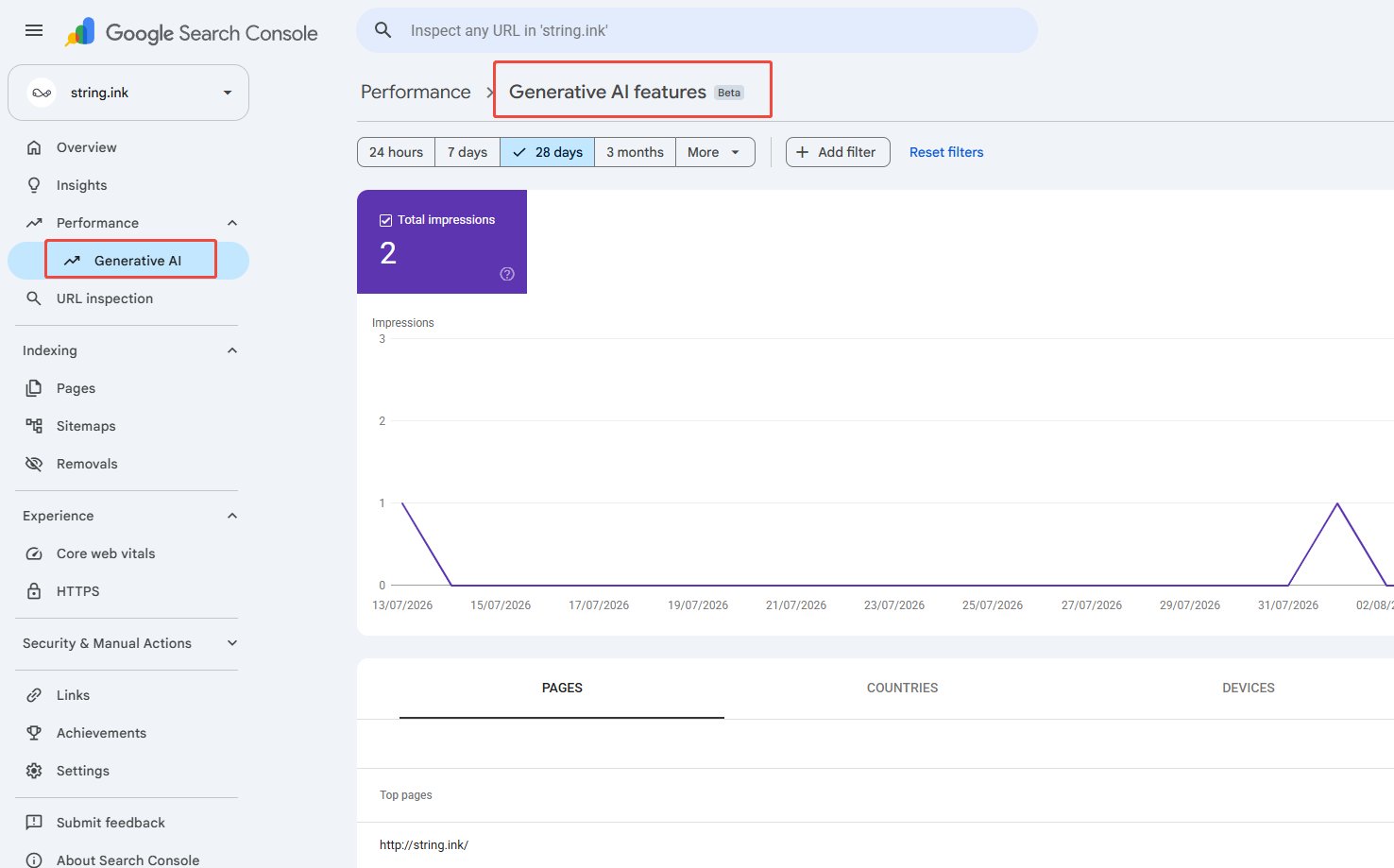
On June 3, Google Search Central introduced the Search Generative AI performance report. It breaks out impressions your pages earn inside Google's generative AI experiences — AI Overviews and AI Mode — into a table of their own, with a parallel report covering generative AI impressions in Discover. Available dimensions include page, country, device, and date, with hourly, daily, weekly, and monthly granularity. The reports first rolled out to a subset of sites in the UK, expanded in late June, and by August were reaching more regions.
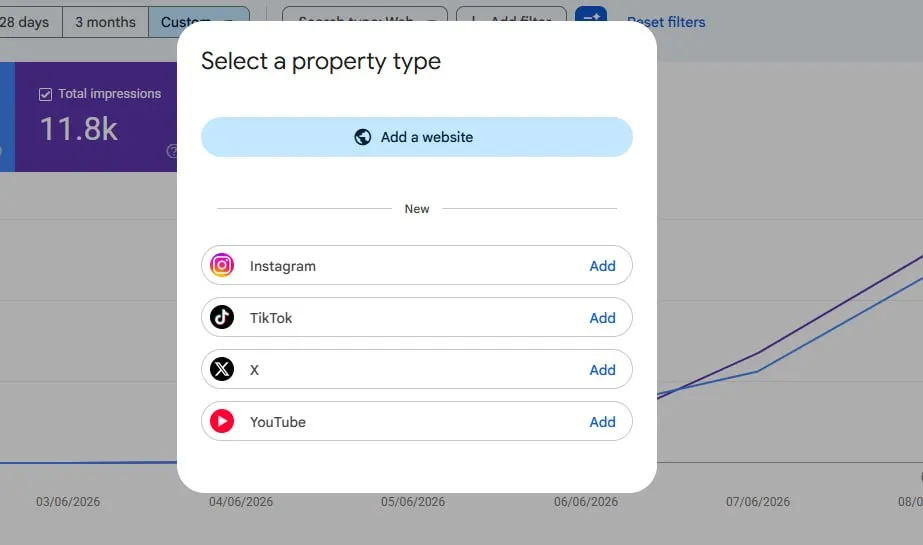
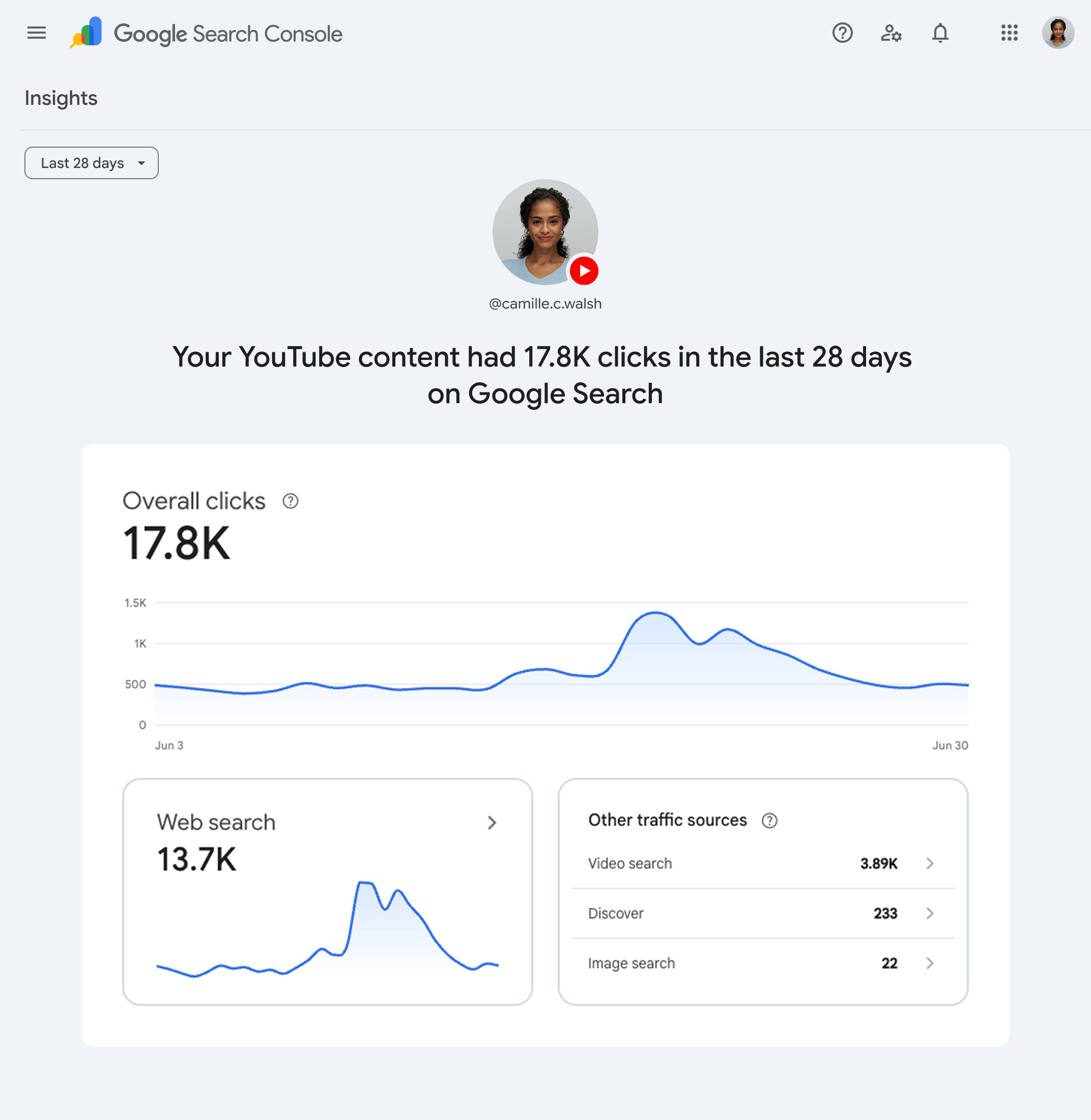
On July 7, Google launched platform properties. Instagram, TikTok, X, and YouTube accounts can be added and verified directly in Search Console as a "property," letting you see how content on those platforms performs in Google Search, Discover, and Google News. Later that month Google announced that platform properties were rolling out globally, alongside an official guide to analyzing social and video content performance. One detail matters more than it first appears: verifying a platform property does not require owning a website.
Put the two together and the conclusion is singular: Search Console is no longer a website analytics tool. It is becoming a content visibility tool. For companies selling into overseas markets, that means something the industry has waited two years for — your website, AI search, and social content can finally be discussed inside a single measurement framework, with an official source of record.
The separate table matters more than the data in it
First, clear up a point that is easy to misread. Impressions from AI Overviews and AI Mode were already counted in the totals of the main Search Console performance report. They were simply blended in with blue-link data and impossible to isolate. The new report is not "new data." It is data that was always there, finally separated out from what was diluting it.
The signal value of that move far exceeds the analytical value. When a feature earns its own report inside Google's own measurement tool, Google is acknowledging it as a distinct distribution surface rather than a module on the results page. For two years, the internal debate at export-focused companies — does AI search deserve dedicated investment, or not? — stalled largely because nobody had first-party data and everyone was relying on third-party simulated monitoring. That objection no longer holds.
At the same time, be clear about the report's current limits, or you will make bad decisions with it:
No click data. The report currently gives impressions only — no clicks, no CTR, no average position. Google has said more metrics will follow, but until then, any claim about "AI search conversion rate" is an estimate. Keep it out of board materials.
No query data. You can see which pages get cited by AI, and from which countries and devices, but not the search terms or prompts that triggered them. That constrains this stage of work to page-level AI visibility optimization, not keyword-level. The question "which assets in our content system are carrying the 'gets cited by AI' role?" is answerable today. "Which terms get us cited?" is not.
Don't run year-over-year comparisons during the rollout. The report is being released region by region. The impression growth you see this month may reflect Google opening up a new region's data rather than your content getting better. Until coverage is complete across your primary target markets, establish a baseline — don't draw growth conclusions.
The opt-out switch that shipped alongside it — should you touch it?
Around the same time as the AI report, a control appeared in Search Console allowing a site to block its content from appearing in AI Overviews, AI Mode, and Discover AI features (visible June 3, effective from June 17). Google was explicit: the choice is not used as a general search ranking signal, but opting out means forfeiting the impressions and traffic those AI features generate. It also does not cover the Gemini app.
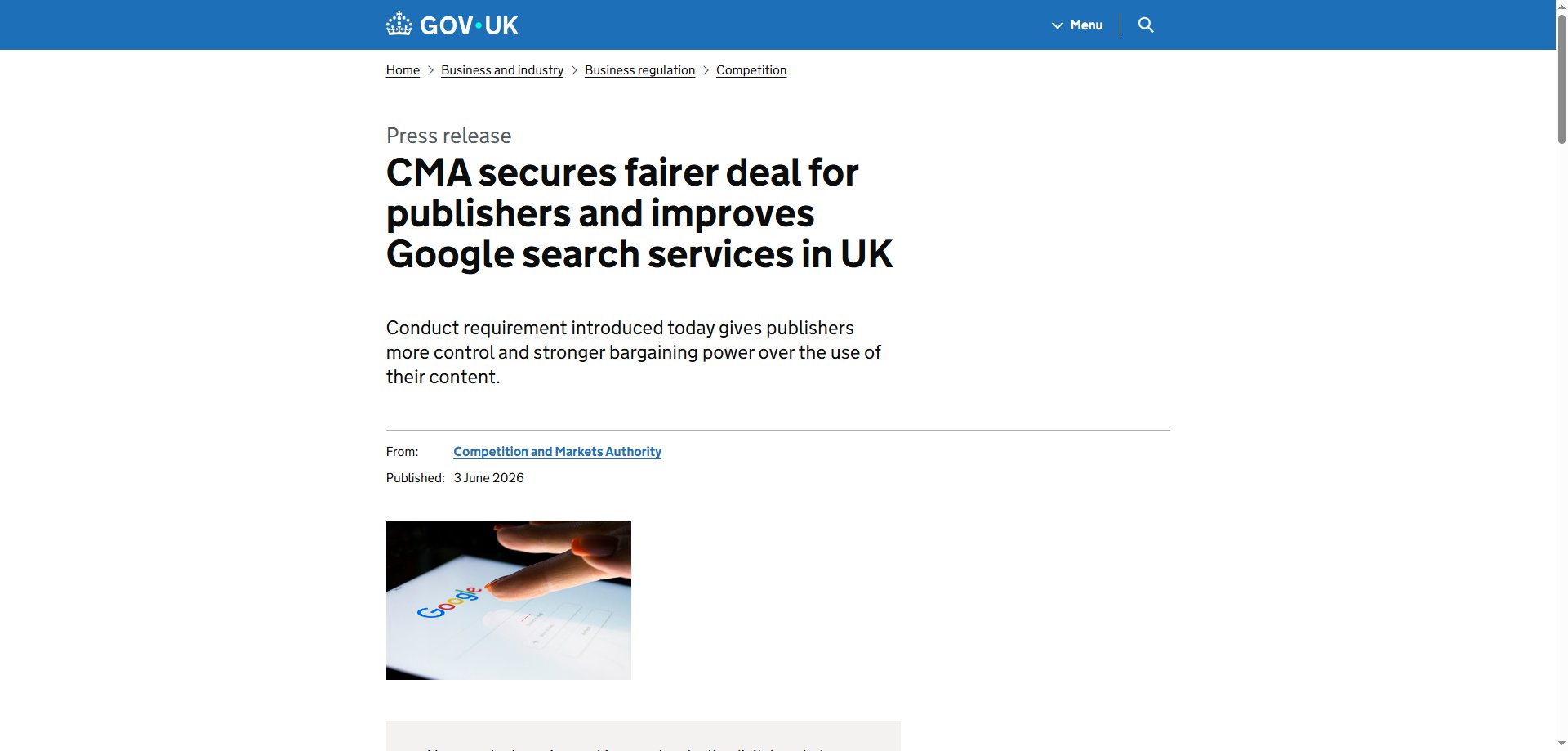
This control did not come from a product roadmap. It came from regulation. After designating Google as holding strategic market status in general search services, the UK's CMA published conduct requirements on June 3 obliging Google to offer publishers an opt-out from AI features while preserving their visibility in traditional search, with the main obligations taking effect in December 2026. The UK-first launch reflects a compliance calendar, not a product one.
For the overwhelming majority of companies marketing abroad, the correct use of this switch is not to use it. It was designed as negotiating leverage for rights holders who monetize content, not for demand-side content — product-led content, solution pages, industry reports. B2B content assets in export markets are not monetized through display impressions; being cited by AI buys mindshare early in the decision chain. Turning it off severs an entry point voluntarily. The small subset of companies that should actually be watching it are those treating paid content or research reports as a standalone revenue line.
Platform properties: it measures search spillover from social, not social itself
Platform properties are most often misread as "Google built you a social media dashboard." They are not. They measure how your Instagram/TikTok/X/YouTube content performs inside the Google ecosystem — Search, Discover, News — and exclude native platform data such as views and engagement. The metrics are the familiar set: clicks, impressions, average CTR, average position, broken out by country, device, query, and specific item (an individual post, video, or playlist). There is also an Insights report for trends and top content, and Achievements for milestones.
This layer is especially undervalued by companies selling abroad. A product demo video or a technical explainer post may have a 72-hour lifespan inside the platform, yet keep answering long-tail questions in Google Search for two years. Until now, that return did not exist anywhere in your reporting — it counted as neither website traffic nor social engagement. It is now quantifiable.
A few practical problems to handle up front:
LinkedIn is not on the supported list. For B2B companies selling into overseas markets, this is the biggest gap. LinkedIn is very likely your primary channel, and it cannot currently be connected as a platform property. The new framework will cover your YouTube tutorials, your technical content on X, and your brand and employer-brand content on Instagram and TikTok — but LinkedIn's search spillover still has to be inferred indirectly from GA4 referral and landing page data. Don't plan as if coverage will be complete in one pass.
One property per account. Companies operating across languages and regions typically run an account matrix — a primary English handle, a Spanish handle, a Japanese handle, regional sub-accounts. Each has to be added and verified separately, and reporting is separate too; cross-property comparison means exporting everything into one table. The earlier you design that structure, the cheaper it is. Set naming conventions, owners, and export cadence now.
Authorization is re-verified periodically. When a connection drops, the property pauses until it is re-verified. Social account permissions usually sit with marketing operations or an outside agency, so staff turnover breaks the data feed. Put it on the handover checklist.
New properties take a few days to start collecting data. Set them up now not to look at this week, but to have a baseline in Q4.
Bringing all three asset types into one measurement system
This is what the article is really about. The tooling is in place; what's missing is a common definition. Build it in three layers.
Layer one: a single content asset ledger
List every outward-facing content asset in one table, regardless of where it lives: website pages, YouTube videos, long-form posts on X, TikTok and Reels, and the LinkedIn content you can't yet connect. Each row should carry at minimum: market/language, target search intent (informational / comparative / transactional), funnel stage, owner, and publish date.
The critical column is intent. AI Overviews erode informational intent hardest — "what is X," "X vs. Y," "best X for Z" — and those are exactly the categories that dominate B2B export content libraries. Only once the ledger exists can you answer: how much of our content portfolio sits directly in the path of AI summaries?
Layer two: three metrics with shared definitions
AI impression share = generative AI report impressions / total impressions in the main performance report. This is the single most important metric. Note that the numerator is a subset of the denominator; it measures what proportion of your visibility is happening inside an AI interface. The ratio will vary widely across markets and content types, so read it as a month-over-month trend, not an absolute number.
AI citation coverage = pages with impressions in the AI report / total pages in that topic cluster. It answers a specific question: within a cluster, which pieces does Google actually recognize? If 3 out of 20 pieces get cited repeatedly, the other 17 need to justify their existence — a pattern that usually points to redundancy and a lack of independent informational value.
Impression–click divergence. When main-report impressions rise, clicks stay flat, and AI impression share climbs over the same period, that combination is the classic signature of AI summaries absorbing informational traffic. The response is not to delete the content. It is to change those pages' objective from "earn the click" to "earn the citation," and to move conversion capture forward onto other assets.
Apply the same definitions across social properties: merge the exports from each platform property, look at clicks and impressions for each platform's content on the Google side, and compare it to website content on a like-for-like basis. You will get an answer you have never had before — in each market, which medium is Google actually most willing to surface. In some language markets, search spillover from YouTube content will run clearly ahead of website articles. That is a signal to change the investment mix.
Layer three: honest attribution boundaries
Write these in the report footer to prevent internal misreading. The AI report has no click data, so AI channel ROI cannot be calculated. Platform property data is not merged into website property data, and the two totals cannot simply be added together. Rollout-period data is incomplete, so period-over-period comparisons are biased. And off-site AI surfaces — the Gemini app, ChatGPT, Perplexity — fall entirely outside Search Console's coverage; that portion still needs third-party monitoring, or no commitment at all.
A new framework usually dies from over-promising. Draw a clear line around what you can't claim, and the part you can claim will be believed.
Three concrete changes to how you produce content
One: write something that doesn't exist elsewhere. When AI generates a summary, it synthesizes consensus that already exists — it doesn't need a 21st article restating the same points. Content that gets cited usually carries information nobody else has: first-party data, hands-on test results, specific pricing and compliance details, real customer scenarios. For companies selling abroad, the easiest and most overlooked source is what only the local market knows — local compliance requirements, payment habits, industry conventions. That material is naturally scarce, and it is exactly the kind of authoritative source AI is looking for.
Two: make the structure explicit. Clear question-form subheads, an opening paragraph that states the conclusion outright, extractable definitions and steps, and consistent entity naming (product names, company names, and standard names identical sitewide). None of this is new technique, but it carries more weight in a citation context than it ever did in a blue-link context.
Three: title video and social content for search intent. Now that YouTube and TikTok performance flows into Search Console, Google is telling you it is using that content to answer search demand. Putting full question phrasing and product entity names into titles and descriptions costs almost nothing at the margin, and the return shows up directly in platform property impression data. Stop using hook-style titles that only the platform's internal algorithm understands to carry content that has real search value.
The one-line conclusion
Neither update changed the ranking rules, but both changed the scoreboard. With AI impressions in their own report and social content inside Search Console, "content visibility" is for the first time a quantity you can aggregate across channels. The real window for companies selling into overseas markets isn't about optimizing something first — it's about establishing shared definitions and a baseline now, while the data is newly open and competitors are still watching. By the time every market's data is fully available, the companies with a baseline will be doing attribution, and the ones without will still be backfilling numbers.