

A new set of GEO data landed in August. The part export teams should track separately is the widening gap between rankings and AI citations. Pages near the top of Google results and the sources AI answers actually cite have become two different things. This article brings together three groups of key numbers, their sources, scope, and what export teams can do with them as they decide how much to invest in GEO.
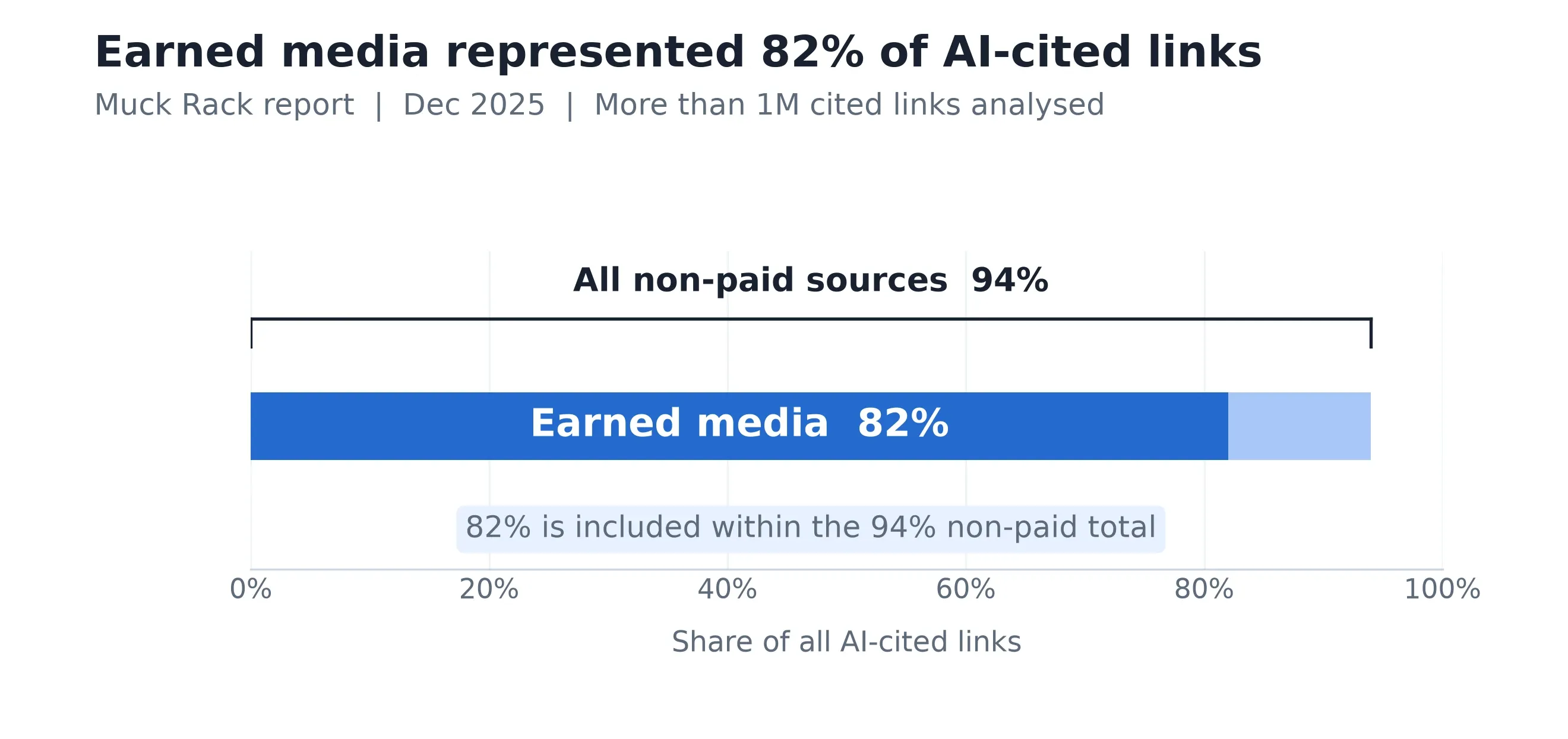
Start with where the numbers came from. In July 2026, BrandCited summarised an Ahrefs data set covering 863,000 keywords and 4 million Google AI Overview source URLs from July 2025 to March 2026. By that account, the share of top-10 organic pages among AI Overview citation sources fell from 76% to 38%.
Ranking Position and AI Citations Are Now Two Different Things
A second set of numbers points in the same direction. A May report from 5W cites Brandlight's analysis, which puts the overlap between top Google-ranked pages and sources cited by AI answers at under 20%, down from 70%.
ConvertMate's 2026 GEO Benchmark offers a third confirmation. It reports that 83% of AI Overview citations come from pages outside the organic top 10. Together, the three data sets describe the same shift. Ranking highly in organic search is playing a smaller role in where AI gets its citations.
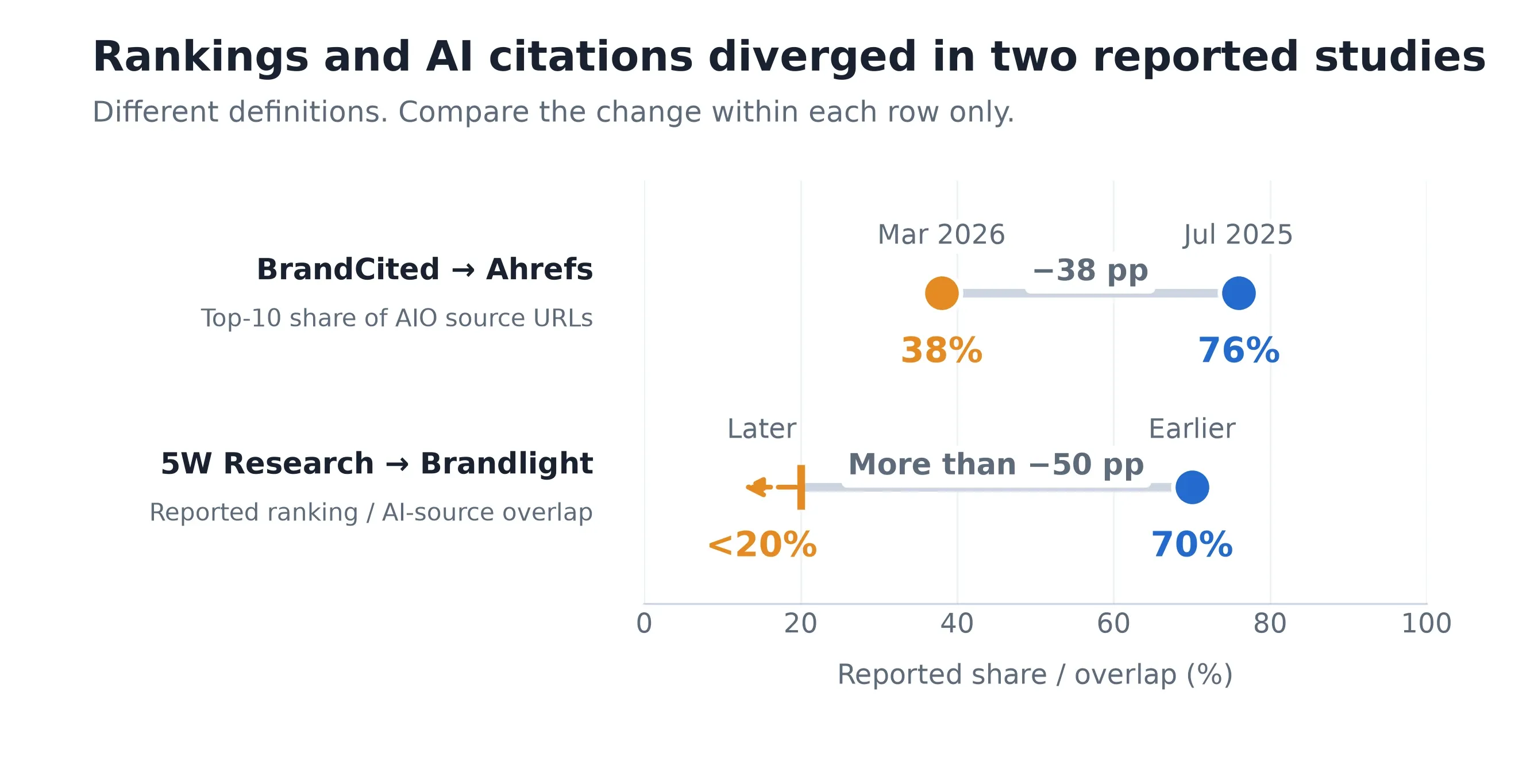
Citation composition tells the same story. Muck Rack's December 2025 What Is AI Reading? report analysed more than one million links cited by leading AI models. It found that about 94% of citations came from non-paid sources, with earned media alone accounting for 82%. Here, earned media means third-party coverage and content a brand did not pay to place.
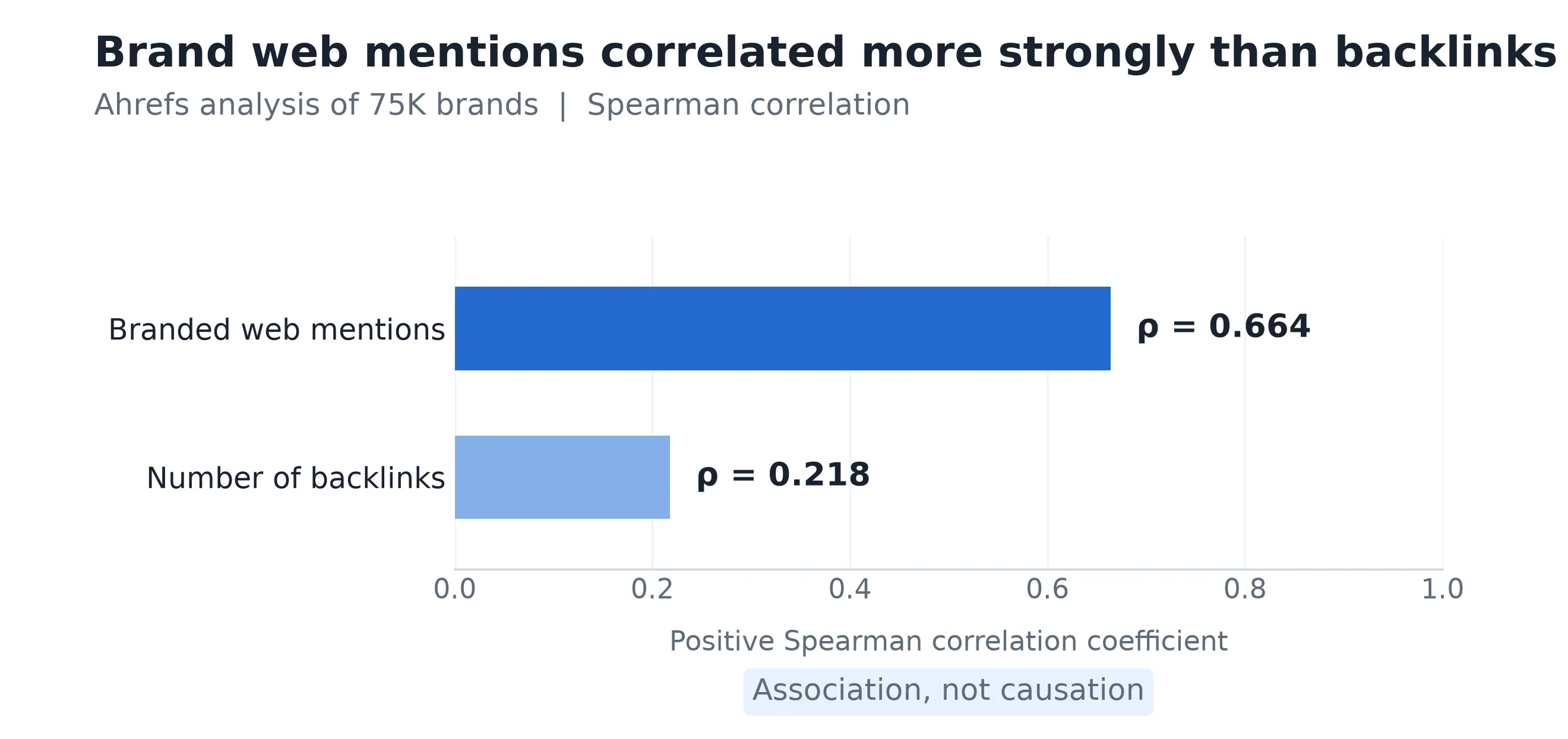
Ahrefs' May 2025 analysis of 75,000 brands used Spearman correlation to examine brand appearances in Google AI Overviews. Branded web mentions had a coefficient of 0.664, compared with 0.218 for the number of backlinks.
For export teams, this correlation is worth tracking separately. Traditional SEO ranking signals and the indicators associated with AI citations do not fully overlap. Keeping two reports makes changes in each easier to see. Folding AI Overview citations back into the old ranking tracker makes both harder to read. Being cited can help organic performance too. BrightEdge's 2025 data found that brands cited by Google AI Overviews see 35% higher click-through rates on adjacent organic results, so this is not an either-or choice.
AI Visitors Convert Well, but Scope Still Matters
Once you see the overlap falling, the first practical question is whether AI referral traffic is worth pursuing. Conversion-rate data are the most eye-catching part of the picture, and they are also where scope matters most.
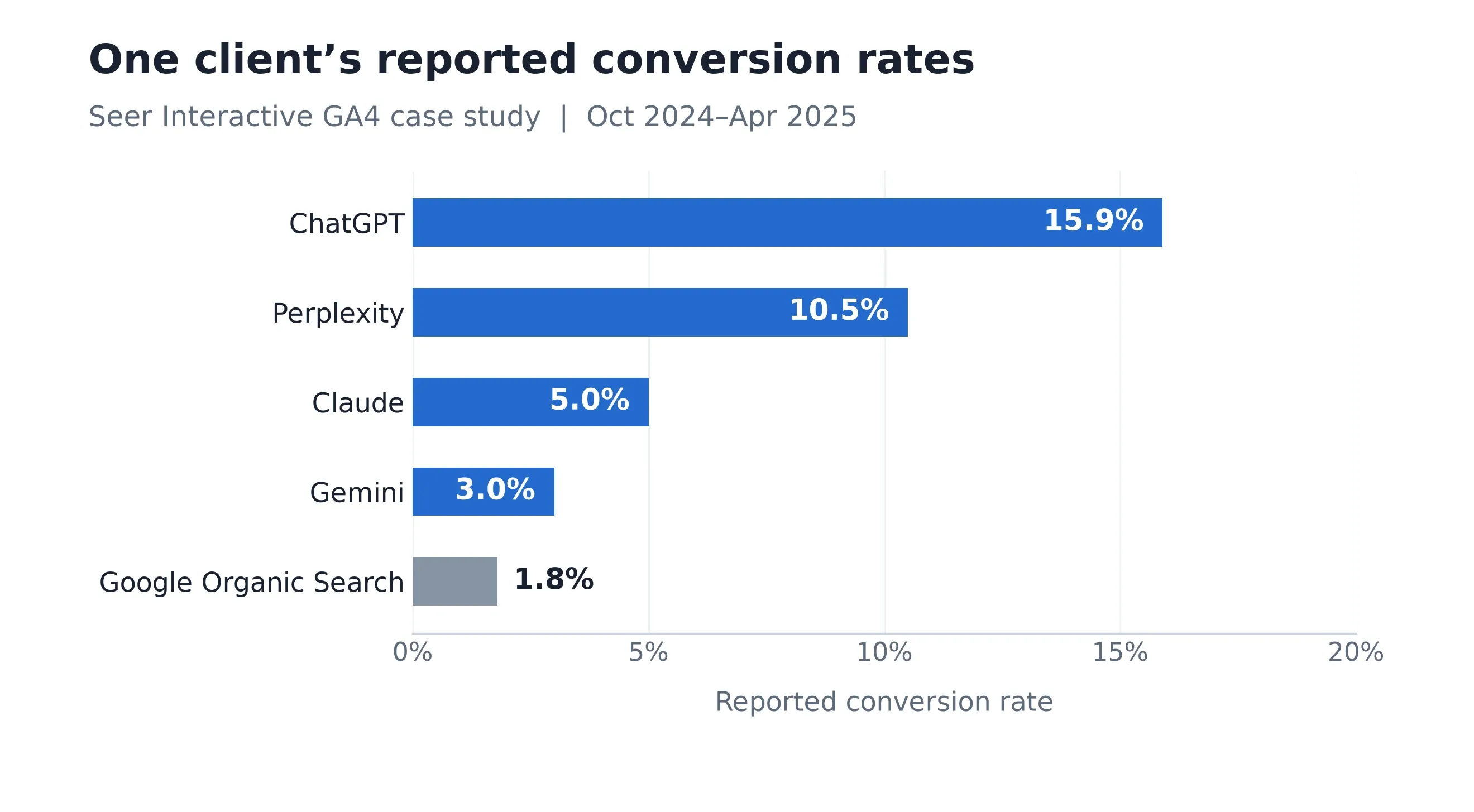
Seer Interactive's June 2025 case study used GA4 data from one client, covering October 1, 2024 through April 30, 2025. It compared four AI sources with Google organic search. Reported conversion rates were 15.9% for ChatGPT, 10.5% for Perplexity, 5.0% for Claude, 3.0% for Gemini, and 1.76% for Google organic search. ChatGPT's rate was close to nine times the organic average.
Three more data sets are worth reading together. Ahrefs' June 2025 data showed AI search visitors accounting for only 0.5% of total visitors while contributing 12.1% of signups, roughly a 24x conversion ratio versus organic. Semrush's July 2025 data put LLM visitor conversion at 4.4x that of traditional organic search. Adobe Digital Insights' January 2026 holiday report showed AI referral traffic up 693% year over year, converting 31% better than non-AI traffic, with revenue per visitor up 254%.
Before taking these numbers into budget discussions, two points need to be clear. First, AI traffic is still small. In the Ahrefs set it accounts for 0.5% of total visitors. Part of its high conversion rate comes from selection effect. People who click through from an AI answer usually arrive with clearer intent than someone casually opening an organic result. Second, Adobe's data covers US retail during the holiday season, so full-year, all-industry results may differ. The practical takeaway is that AI referral traffic is still small, but visitor quality is worth tracking separately in high-ticket categories, long decision cycles, and comparison-heavy purchases.
Three Things Export Teams Can Do Now
In execution, measure first and talk about content budgets later.
First, keep two dashboards separate. AI Overview citations cannot be treated as rankings. A citation may appear today and disappear in the next session. AirOps' 2026 State of AI Search found that only 30% of brands maintain consistent visibility across consecutive AI sessions. Tracking citations like keyword rankings turns an already volatile signal into a noisier report. Keep a separate sheet that records where and how often the brand is mentioned in ChatGPT, Perplexity, and Google AI Overviews. The volatility is itself useful information.
Second, group AI referral traffic separately in GA4. Default reports mix chatgpt.com and perplexity.ai with other referrals. Pull them out as their own session sources, then track signups and orders more closely than pageviews. Know how much AI traffic you are getting today before deciding whether to add budget.
Third, treat mention rate as its own metric. Since brand mentions correlate far more strongly with AI visibility than backlinks do, track how many third-party sources mention your brand and how many AI answers include it. For English-language sites and export brands, that points directly to a content action. A Chinese-language site needs the brand to appear in English third-party content before it can enter the AI citation pool. Reviews, comparisons, and industry media citations are the main routes.
There are practical ways to change the content itself. The peer-reviewed KDD 2024 paper by Princeton, Georgia Tech, the Allen Institute for AI, and IIT Delhi reached a clear conclusion. Adding statistical data was the single most effective method for improving AI visibility, lifting it by 41%. Citing external sources improved low-ranking pages by as much as 115%. Neither change requires rebuilding existing content from scratch. A content team can put both into practice.
The Window Is Still Open, Do Not Wait for the User Base to Grow
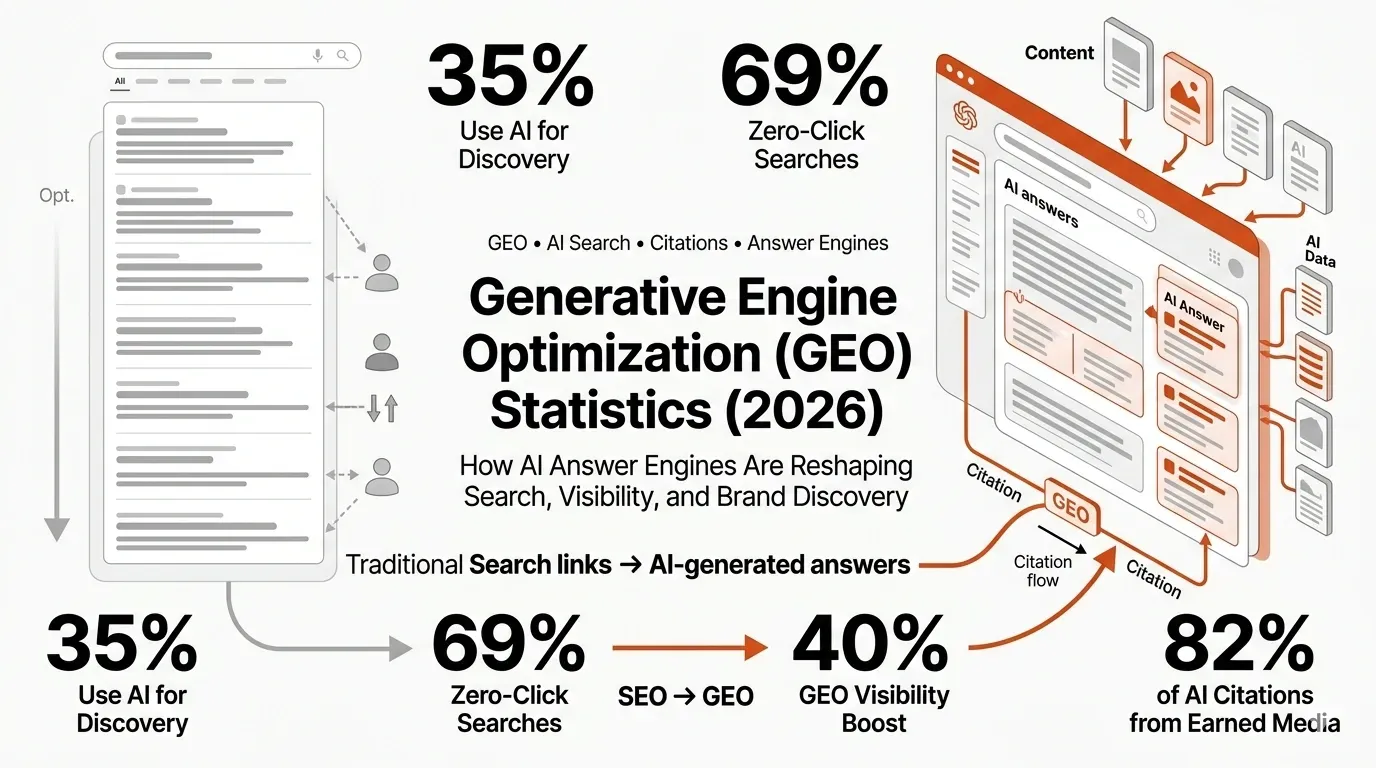
Whether to wait for AI search audiences to grow before entering is a common question for export teams. Similarweb's Generative AI Brand Visibility Index this year shows that 35% of US consumers use AI tools during product discovery, compared with 13.6% using traditional search. Zero-click search is another relevant signal. Similarweb's July 2025 data showed Google zero-click searches rising from 56% to 69% in a year. Search behavior is moving toward reading the answer without opening a page. Teams that wait for the audience to grow before entering will have fewer content positions left to claim.