

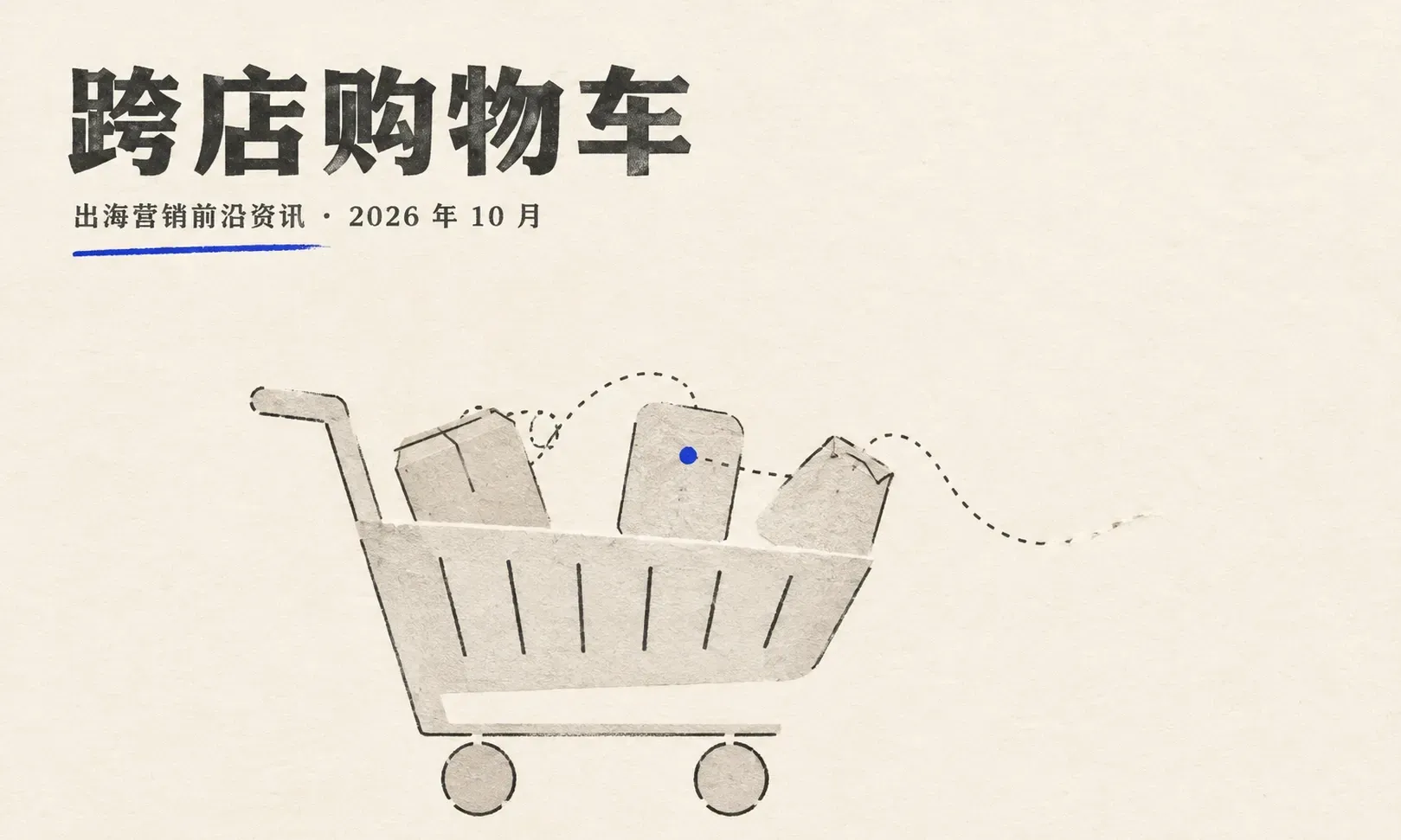
On October 15, Google's Universal Cart launched in the United States, live across Google Search and the Gemini app. Items picked in search results or in Gemini, no matter which store they come from, can be saved into one cart. From there it watches for price drops and restocks, surfaces usable promo codes, suggests payment methods, and finishes the purchase either through Google Pay or by handing the items back to the merchant's site to complete the order. The named launch partners include Nike, Sephora, Target, Ulta Beauty, Walmart, Wayfair, and a group of Shopify merchants. Google previewed the feature at I/O earlier this year, and it is now shipping.
For cross-border sellers, the reason to spend ten minutes with this news sits in one structural shift. Google has strung cross-store products, price monitoring, promotions, and checkout into a single experience, and Google itself hosts the container. Every link in that chain feeds on product data, so product data gains another level of weight.
The conclusion first. Google describes two tracks, agentic capabilities that act on a shopper's behalf, and practical tools that give shoppers a sense of control; Universal Cart belongs to the second. It is a shopping utility, deliberately kept separate from the products Google sells to merchants. It will not send a wave of traffic, and it is not a new ad slot. The work it implies is plain. Harden the product data and eligibility in Merchant Center, think through the checkout and hand-off paths, and measure visits to this entry point separately.
What It Takes for Your Products to Enter This Cart
The official documentation splits the bar into layers, and each can be checked in turn.
The routine layer is keeping Merchant Center product data valid, feeds healthy and eligibility intact, the shared precondition for every shopping surface. The product data guide on this site walks through that full path.
The dedicated layer covers UCP checkout preparation. The merchant checklist names four items. Return policies must be configured, since they are part of the Merchant of Record requirement and appear on the checkout screen; customer support information is also required, feeding the contact-the-merchant entry. Beyond that, sellers review product categories that cannot take part in checkout, and signal checkout eligibility through product data. To appear on the button that completes payment on Google, an item needs the native_commerce(checkout_eligibility) attribute; the official help page states plainly that only listings carrying this mark display the Buy button.
The path layer is the choice between two integration routes. One completes payment directly on Google, which requires the Google Pay payment handler and order status updates afterward. The other transfers the cart back to your own site to finish the order, and Google provides a fast-track in the Merchant Center tool, noting this route does not need a full product feed setup. The two differ in build and upkeep costs, so decide where you want conversion to happen before picking one. Either way, the documentation states that the merchant remains the seller of record, with order confirmations and customer support staying with the business.
The ecosystem signal is clear too. The protocol was co-developed by Google with Shopify, Etsy, Wayfair, Target, and Walmart, carries more than 20 public endorsing partners, and is an open-source project. Google calls out Shopify merchants specifically, which signals a paved integration path on that platform, and the Shopify setup guide covers the wider picture of that storefront stack. Sellers on custom-built sites should watch the official UCP documentation, which itself notes that UCP is an evolving standard and not every capability in the spec is available on Google's surfaces yet.
One boundary deserves attention. The checkout experience on Google currently opens to select merchants; the official help page states it applies to products with eligibility in the United States, Canada, and Australia, for participating merchants and partners, and interested sellers submit an expression-of-interest form first. No promises were made, so keep expectations level and start by getting eligibility and information straight.
Three Things to Do Now
One, make price and stock consistency solid. The cart pushes alerts for price drops and restocks, which means a wrong price or a stale stock count will be seen faster and by more people. A bad price carried into a shopping entry point at face value leaves the seller holding the difference. Price and inventory were already an old problem on the ads side, and the logic of dividing product pools was covered in that comparison; the cart simply moves the issue somewhere more visible.
Two, align promo and discount information. The cart finds usable codes automatically, so if your site, your ads, and your product source disagree about what promotion is running, customers will notice before any system does. The October 9 piece put together a decision list for the same class of problem around automatic promotion scraping.
Three, bring this entry point into measurement. Visits arriving from the cart and from AI surfaces need to be tagged separately in analytics; the UCP integration tool also includes a view of the checkout funnel worth watching. The entry itself is new and there is no ready-made standalone report, so tag your landing paths with distinguishable parameters and read the trend after a while.
Boundaries Worth Keeping in Mind
Treating Universal Cart as a new slot to farm will lead the wrong way. What shows up in the cart depends on product eligibility and data quality, with very little to do with ad budget; it is a shopper's tool first.
Waiting on UCP is fine. The standard is evolving, capabilities open in batches, so check eligibility and target markets before committing effort. This is also another round in a familiar pattern, following the policy consolidation and the EEA free listings shutdown, and the lesson holds. Platform changes eventually land on the seller's to-do list.
Price and stock hygiene is worth more than it used to be. Alerts expose bad prices and delays to more people, so make consistency a weekly check rather than an after-the-fact repair.