

1. Why overseas market research matters
"Think globally, act locally" is more than a slogan. It reflects exactly what many companies going abroad need today: a global ambition combined with localized execution. In an era of economic globalization, overseas expansion has become a key path for brands seeking new growth. Yet many teams still try to copy and paste domestic playbooks into foreign markets, only to run into resistance everywhere. The deeper reason is that overseas markets are not one homogeneous block. They are fragmented, and they require multi-angle analysis and market-specific strategies. In North America and Europe, the main barriers may be compliance, copyright, and regulation. In Southeast Asia, the harder problems may be logistics and cash-on-delivery completion rates.
A classic case is Walmart's failed expansion into Germany. Walmart tried to transplant American-style management directly into the local market, requiring employees to greet customers with smiles and help bag purchases. In Germany, that was often seen as intrusive and unnatural, which triggered strong resistance from labor unions. On top of that, Walmart's pricing tactics violated Germany's Act Against Restraints of Competition. After losing hundreds of millions of dollars, Walmart eventually exited the German market. The failure reflected a lack of real research into legal compliance and union culture.
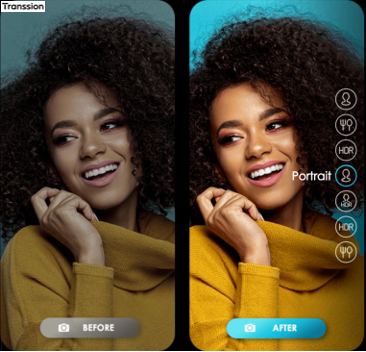
Transsion tells the opposite story. When Samsung and Nokia still dominated Africa, Transsion did not try to outspend them on brand power. Instead, it conducted deep on-the-ground scenario research. It improved camera algorithms for darker skin tones, so local users could take clearer photos. It launched phones with four SIM slots and four standby modes to match infrastructure and cost constraints. It also emphasized long battery life and louder speakers to match daily entertainment needs. The result was a major success in the African market.
That is why we believe the first task in any overseas expansion effort is precise market research. Only by examining purchasing power, market potential, competition, legal constraints, and actual demand in detail can a brand truly understand its audience and position itself accurately. That is what enables faster and more precise market entry.
As a professional overseas marketing team, String Global offers clients a practical seven-day research framework designed to help 0-to-1 teams get started efficiently. It gives companies a deeper understanding of target markets and becomes the foundation for overseas strategy and resource allocation.
2. Where overseas market research should begin
Before jumping into research tasks, the team needs to define the core objective clearly. In our view, successful research should always lock onto three variables first: product x audience x country.
First, a company needs to make sure the product itself is strong in both service experience and quality. A good product and a trustworthy brand make overseas entry much easier. At the same time, teams must research local culture and values carefully to avoid misunderstandings in product design or marketing activity, and to make sure the local audience feels genuine care and relevance.
Companies also need to study local buying habits, consumer preferences, pain points, and receptiveness to innovation in order to build a clear audience profile. That audience layer then needs to be matched against the product's strengths and features so the team can identify exactly where the product should compete.
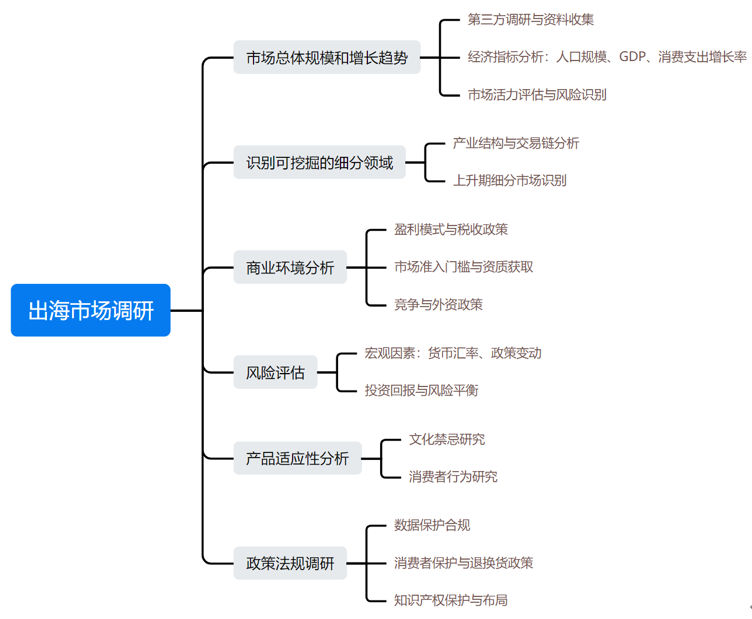
When screening countries, we recommend building a multi-dimensional evaluation system. Teams can start with public information from official sites and other channels to understand population size, total GDP, GDP growth, and consumer-spending growth. Those indicators help estimate basic market size and potential. Beyond that, deeper research should cover local regulation, tax policy, and market-entry barriers.
3. How first-party research is executed
Based on that strategy, we break the seven-day research process into detailed daily tasks, each tied to a specific output. The process can be understood through the following framework.
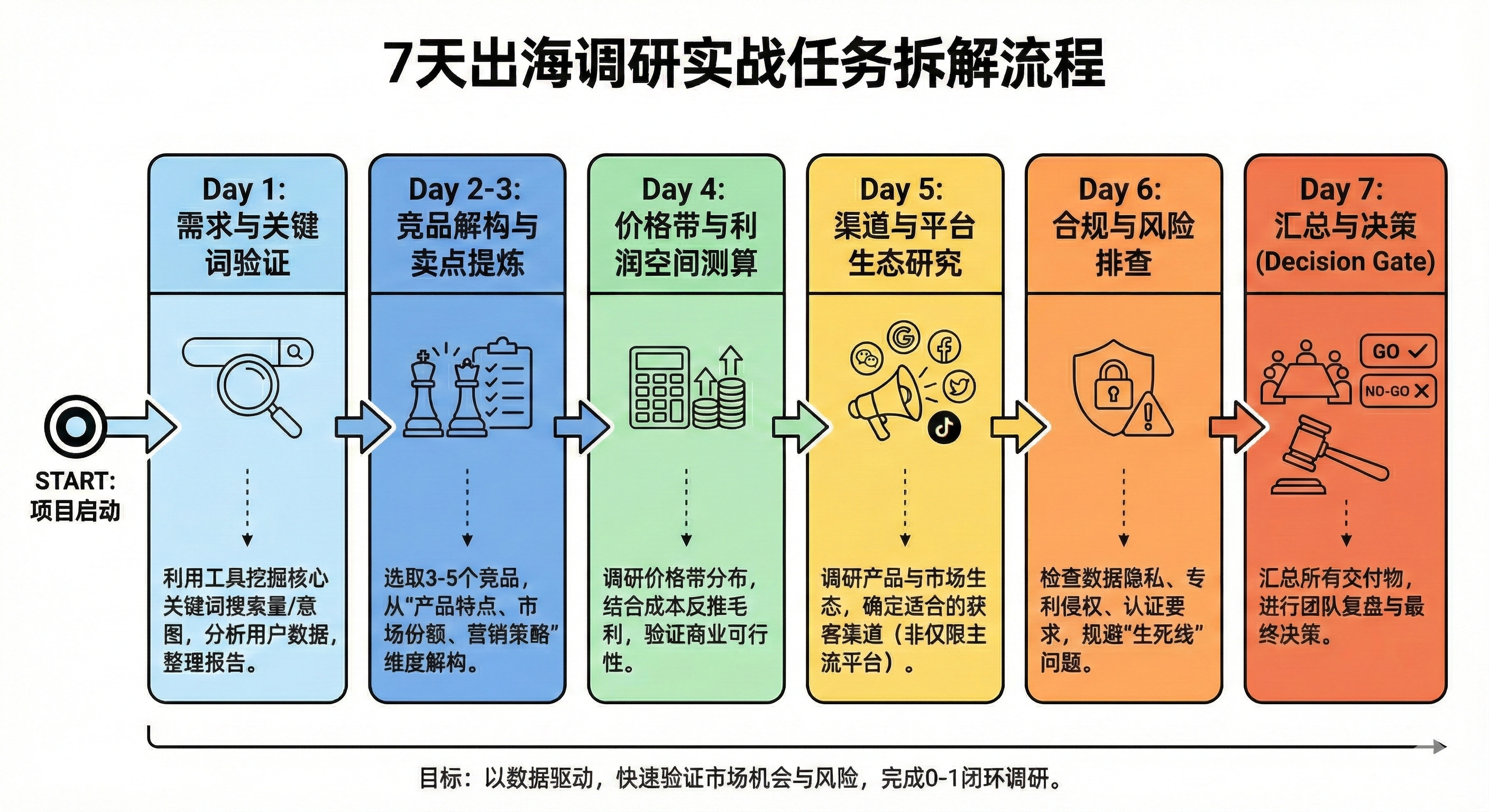
Our workflow is organized around three ideas: demand fit, growth breakdown, and cautious decision-making. At the early stage, the key is to avoid broad, inefficient keywords and instead use search-intent analysis to identify real user needs and pain points. That helps clarify product differentiation and unmet opportunity areas, leading to outputs such as keyword reports, user-intent maps, and competitive comparisons. In the middle stage, we go deeper into pricing, margins, and channel selection to validate both attractiveness and conversion potential, then produce deliverables such as pricing strategy analysis and channel recommendations. In the final stage, we systematically check for compliance risks and hidden pitfalls, consolidate all relevant files and data, and deliver risk and compliance checklists that support a complete overseas market research report.
4. Conclusion and recommendation
Traditional research often takes too long and falls into the trap of discussing market size without generating practical next steps. Our core perspective is different: immediate usefulness and deliverable-oriented output. We believe an effective overseas market study should be completed efficiently and produce concrete, reusable outputs at every stage so that teams can turn uncertainty into action.
With standardized templates and tools, String Global helps even 0-to-1 teams build a clear understanding of target markets within a short period. If you want a template or need help turning overseas uncertainty into an executable roadmap, we would be glad to help.