

For brand decision-makers who are debating whether to expand overseas, and which market to enter, market evaluation almost always starts with the same move: open an industry report, look at GDP, population, and growth rate, then check the category's search volume. If the numbers are big enough, the market feels exciting. If they are big enough, the project gets approved.
The problem with this logic is not that it is wrong. The problem is that it only answers half of the question - and the part that gets ignored is often the part that loses money.
After years of overseas marketing and ad execution, we have seen too many "beautiful on paper" markets burn through clients' budgets. Looking back, almost every failed case points to the same blind spot: teams evaluate "how much demand exists," but what really determines whether you can make money is "how much demand you can actually capture."
The gap between the two can be dozens of times wide.
A more realistic formula: capturable demand
When we evaluate any overseas market internally, we do not rely on "market size" as a single metric. We use a multiplication formula:
Capturable demand = real demand x reachability x affordable acquisition cost
If any one of these three factors approaches zero, the final result also approaches zero, no matter how large the market looks on paper.
- Real demand answers the question: "Do people actually want this?" Search volume is the most honest signal here. If someone is willing to actively search for something on Google, that represents real demand with purchase intent. It is more reliable than any TAM estimate calculated from "population x penetration rate."
- Reachability answers the question: "Can I get in?" Are the organic search positions already locked up by strong local brands through SEO? If all the top positions belong to others, paid traffic may be your only remaining path, and paid traffic is an auction.
- Affordable acquisition cost answers the question: "Can I afford it?" This is the easiest factor to skip, and also the most fatal one. It is not CPC. It is the full-chain cost from one ad click all the way to a real transaction.
Search volume only covers the first factor. Treating that first factor as the whole answer is the root cause behind 90% of failed overseas market evaluations.
What data we actually pull
To turn the formula above into an executable process, we usually evaluate a market across four dimensions:
First, keyword search volume. We use search engine analysis tools to estimate the real potential size of a need in the target market: how many people are searching, what terms they are using, and whether the demand pool is growing or shrinking. This step defines the ceiling.
Second, CPC, or cost per click. Using Google Ads tools, we estimate how much it costs to buy one click in that market. This is the first scale for judging affordability.
Third, the current Google Ads density in the category. How many competitors are consistently bidding on the same group of keywords? The more advertisers there are, the more intense the auction becomes, and the more likely CPC is to rise. This signal is often more important than the current CPC itself, because it suggests where costs may move after you enter.
Fourth, competitors' local SEO strength. Who occupies the organic search results page? If the top positions are all held by local players with years of content depth and authority, your organic traffic may be close to zero. That means nearly all volume has to be bought through paid traffic, which in turn eats into the space you have for "affordability."
These four dimensions are not separate scores. They need to be read together through the multiplication formula. The following two real cases show why.
Case 1: how a beautiful market on paper became a trap
We once researched and tested paid advertising in the financial sector.
At the entry point, it looked like an attractive market. Search volume was huge, demand was real and strong, and CPC looked only "slightly high," at around 2 to 3 dollars. Anyone looking only at the first two factors would conclude that the market was worth entering.
But after testing, the real funnel looked like this:
- CPC: 2 to 3 dollars - seemingly controllable
- Cost per qualified lead: at least 50 dollars, and sometimes as high as 100 dollars
- Actual conversion rate after lead capture: painfully low
The problem sat in the distance between "click" and "transaction," a distance most people ignore. Financial categories demand extremely strong post-lead conversion capabilities. They require mature follow-up processes, sales experience, and trust-building mechanisms. If a team enters without enough certainty or experience, the most common outcome is simple: spend a lot of money buying traffic and leads, then watch them leak away.
CPC may be only 2 dollars, but the amount you truly pay for one customer can be 25 to 50 times higher. CPC is never the real cost. Lead cost is the cost, and conversion is the ultimate goal.
This is the sharpest side of "high search volume does not mean you can capture the market": the demand is real and the pool is large, but for most brands without deep conversion capability, the market's "capturable demand" is close to zero.
Case 2: a tiny pond no one had heard of achieved a net ROI of 3
Now look at another client, whose business was built around e-book gift card balance.
This market was extremely niche and obscure, so obscure that many people did not even know it existed. If you looked only at "market size," almost any industry report would tell you to skip it.
But our research led to the opposite conclusion. Once we placed it into the "capturable demand" formula, the picture changed:
- Real demand: the pool was indeed small, but search tools showed stable, real demand with purchase intent.
- Reachability: there were very few competitors, and organic search positions were not locked up. We could get in.
- Affordability: CPC was low, there were very few long-term advertisers pushing up bids, and the client's own cost structure was light with almost no additional burden.
When the three factors were multiplied, the conclusion was clear: this market had an extremely high capture rate. The pool was small, but we could catch almost all the fish inside it.
The final result proved the judgment right: by choosing this overlooked market, the client achieved a net ROI of 3.
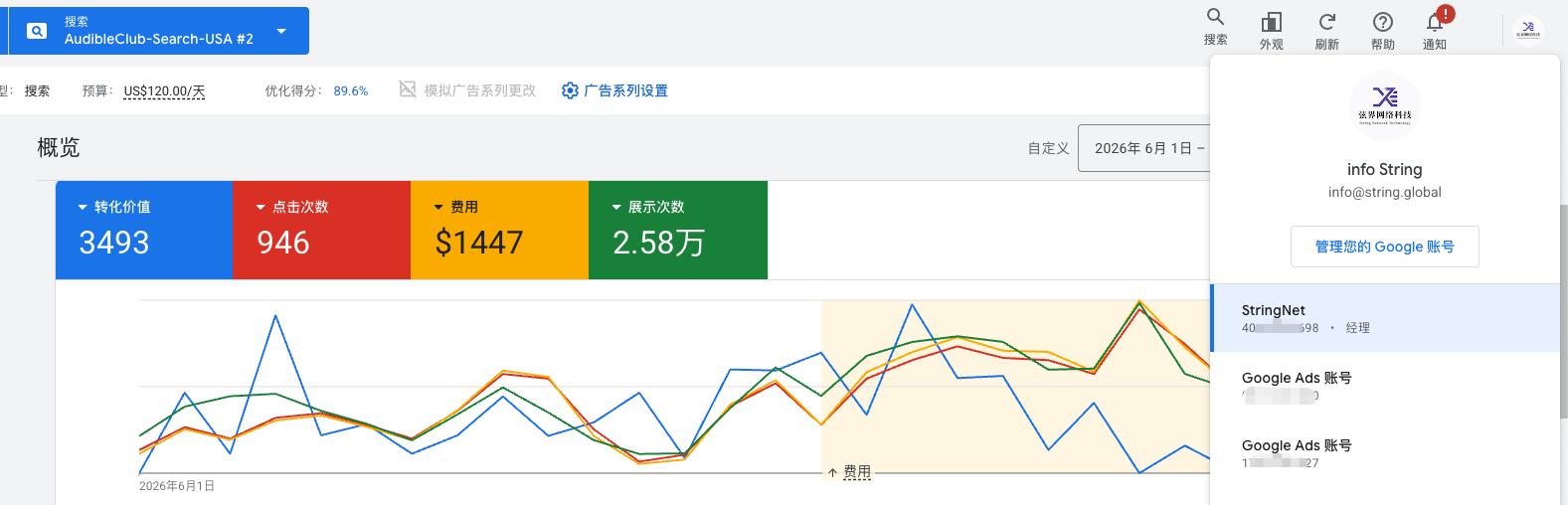
A small pond you can fully capture is better than a large lake where you cannot catch anything. These two cases together are the clearest footnote to that idea.
What does a market that can work actually look like?
After seeing many markets, we have gradually formed a set of measurable triggers for what "this can work" looks like. They are not absolute rules, but they show the kind of shape we are looking for:
- Fewer than four competitors advertising consistently over time. The fewer competitors there are, the cleaner the auction environment is. You are less likely to be pulled into an arms race that keeps pushing CPC higher.
- CPC sits around 1 to 2 dollars, and can potentially be optimized below 1 dollar. Low acquisition cost gives the affordability factor enough margin for error. Even if the conversion funnel has some loss, you can still make money.
When a market has "real demand + few competitors + CPC that can be pushed below 1 dollar," it is often the kind of niche market that mainstream analysis ignores, but that lets you capture demand efficiently and completely. A large part of overseas market evaluation skill lies in recognizing this shape in places where everyone else only sees market size.
A new variable is emerging: visibility in the AI search era
The logic above is built on one premise: users go search. That premise is now being quietly rewritten by AI search.
More overseas users no longer open Google and type a keyword before making purchase decisions. Instead, they ask AI directly: "Which brand is better in this category? Help me compare a few products." AI then gives comparison opinions and review-style conclusions across multiple brands. Whether your product can enter AI's field of vision, and whether AI will actively mention it, is becoming a new variable that must be included in market evaluation.
The threshold here is not exactly the same as traditional SEO. To make AI mention you in an answer, the requirement for EEAT - experience, expertise, authoritativeness, and trustworthiness - is quite high. Building a good product is not enough. The reason AI feels confident recommending a brand is that the brand has accumulated enough authoritative publicity and reputation signals across the web. In other words, in the AI search era, "whether you have enough authoritative publicity" becomes a new prerequisite for whether you can be seen in a market at all.
For decision-makers evaluating a market, this means one more layer needs to be added: who already occupies AI's default answer in this market? Do you have the ability, through product plus publicity, to place yourself inside that answer?
You decide whether to enter. String Global helps you evaluate whether the market is worth it.
Return to the original question: should you expand overseas, and which market should you enter?
If this article had to be condensed into one sentence, it would be this: do not start by asking "how big is the market"; start by asking "how much demand can I actually capture." Market size determines the ceiling, but reachability and affordable acquisition cost determine whether you can survive long enough to touch that ceiling. The difference between the trap in finance and the blue ocean in e-book gift card balance lies exactly there.
But you may have already noticed that this logic is easy to explain and difficult to calculate. How do you measure the real demand pool? Where will CPC move after you enter? How much gross margin will lead cost and conversion loss consume? How strong is the competitor SEO fortress? Is there still a window in AI search visibility? Each factor requires real data, the right tools, and judgment built from enough hard lessons.
That is exactly what String Global does. We have our own search engine analysis tools to estimate the real potential size of a need in the target market, and we combine them with Google Ads tools to estimate CPC and the auction environment. Across multiple categories, we have accumulated the judgment needed to distinguish "looks workable" from "actually profitable." In the new battlefield of AI search, we can also help your product compete for visibility through authoritative publicity.
You decide whether to enter. String Global helps you evaluate, before entry, whether the market is truly worth it.